Oliver and Me
Oliver is not a good dog.
There I was, splayed on the sidewalk with his leash still wrapped around my wrist. My knees were ground into the concrete and both of my hands were scratched.
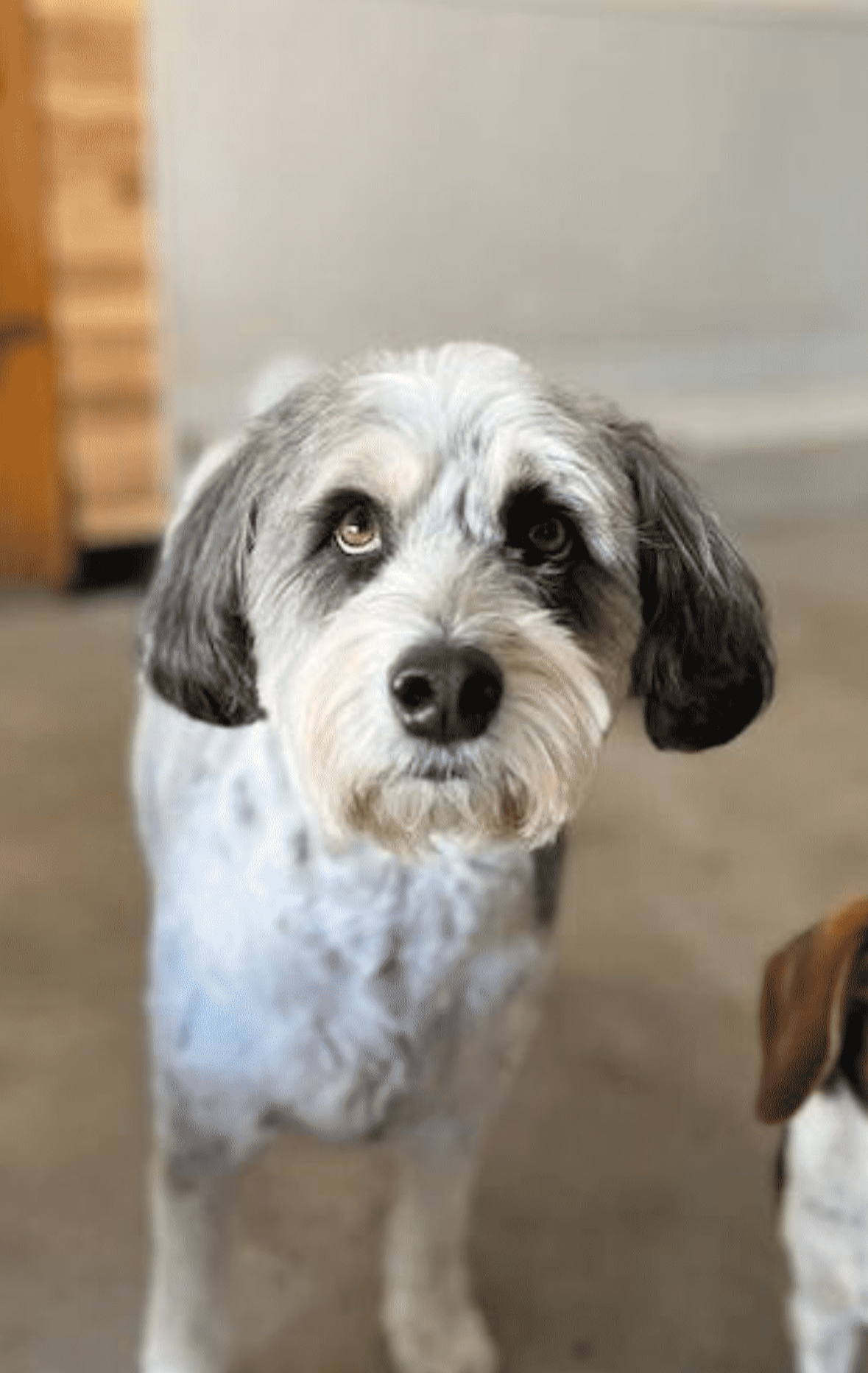
I have a brain injury; I have a service dog specifically to keep me out of situations like this. And yet it was Oliver who’d caused me to fall. Some service dog. Silly me, I’d tried to remove a squeaky ball from his mouth, and he’d wanted to keep it.
Too bad his jaws are stronger than my fingers.
I went down hard.
I’ll admit Oliver isn’t the ideal “service animal.” He does not remind me to take medications, guide me around potholes. Oliver is not overly helpful in the “service department” at all in fact, but he’s still useful. He weighs over 50 pounds—much bigger that I thought he would end up being when I got him at eight weeks old. His reactive nature wards off potential criminals. I feel safe walking him at night. And I feel more stable with him beside me; because of him, my walking has greatly improved. For now, he is exactly the dog I need him to be.
The summer between my junior and senior years of college, I went with a high school friend to Chicago for what was supposed to be one month. I was twenty-one, a very fit student athlete, playing women’s lacrosse for Duke University. Neither my friend, nor I, had our cars, so we used public transportation. On June 14, 2001, after spending the day interning at a consulting firm, I took a city bus back to the apartment where we were staying. It was a Tuesday evening. I was the first one off the bus.
As I got off, I remember seeing a car coming towards me—an enormous Cadillac. Surely the driver would see me, and the car would stop. At the very least, wouldn’t it slow down? I never imagined that it would do neither. I mean, I was standing there. The car knew to stop…right?
I figured I would stand there until it did.
Being in such good shape, I tried to jump over it when I saw the car wasn’t slowing down. Useless thinking on my part. My life was about to be forever changed.
Yep, the car struck me. I remember thinking how disappointed my dad would be in me.
When the paramedics arrived, they induced a coma; the pain would be unbearable otherwise. Later, I was told I had been thrown some forty-odd feet. No skid marks at the scene. The driver hadn’t even tried to stop. Several of my bones were broken, but more significantly I had suffered a TBI (Traumatic Brain Injury)—contrecoup TBI, to be exact—when my head collided with the windshield and then with the pavement.
Before the accident, I didn’t know what my future was going to be, but I was excited for it anyway. After the accident, what lay ahead was a life of recovery, self-doubt, loneliness, boredom. But also triumph.
A few years after the accident, in February of 2006, I moved to New York City from my hometown of Baltimore. I was twenty-six and only partially employed. I received a monthly settlement check to cover my expenses. To some people, I’m sure this sounds like a dream arrangement—not having to work full time, getting a settlement check every month. Yet I found myself going through the motions, keeping busy to distract myself from lost chances. I was unambitious, apathetic, and bored with life. Everything was exactly opposite of what I’d felt before the accident when I was excited for my life post-college to begin.
In those early days in New York, no one was there to tell me what to do next. I didn’t really know anyone here anyway. All of my friends who’d done the “try-out living in NYC thing” had already left. That stage was behind them. Mine was just beginning.
That is how the stand-up bug came to bite me, however. Growing up in a house with two much older and very funny brothers, laughs were never scarce. But because I was a shy girl and so much younger than my siblings it wasn’t until I left for college that my dead pan stylings and witticisms emerged.
While I played lacrosse for Duke, a telling truth often came to the fore. From consistently making jokes at practice, or on the bus for away games, laughs often resulted, and the word, “funny,” was often used to describe me.
“Fran is funny.”
But it wasn’t until after the brain injury that I thought to take my stylings to the stage. Brain injury is known to result in “disinhibition,” which is defined as the inability to withhold an inappropriate or unwanted behavior” (https://braininjurygroup.co.uk/news/disinhibition-after-brain-injury/) Early in my recovery, I did things like lash out at my family, but I’ve learned to tamp that down. When I moved to New York I decided to be funny in a more public forum: disinhibition allowed for that. There I said it - the life-altering, most horrific collision of my existence brought me to stand-up.
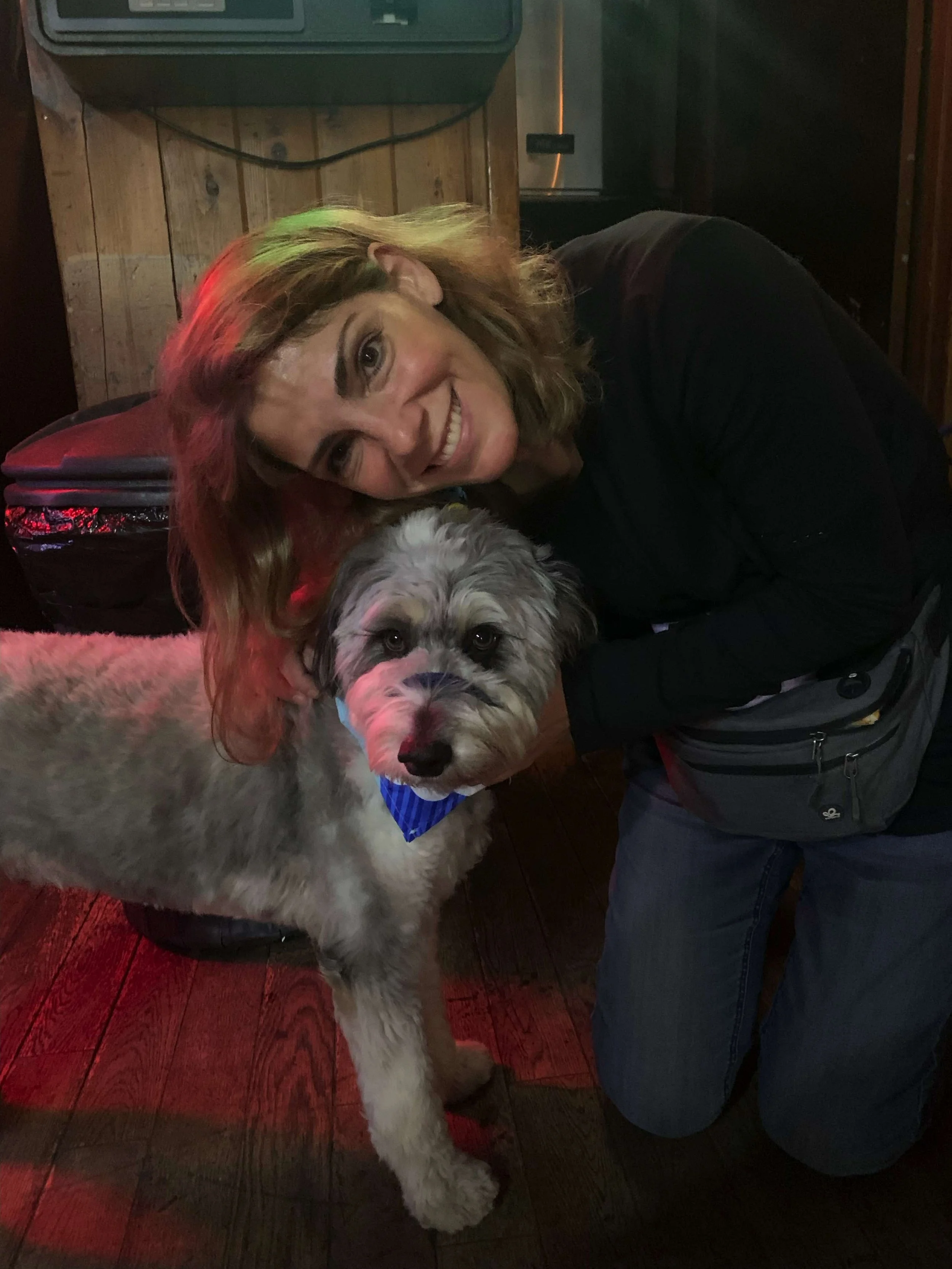
I remembered myself before the accident. I was smart, considerate, physically fit, and a good lacrosse player. Feels like a dream today, but I was well liked and happy.
Everything seemed to be coming together for me then.
I was so happy to be me.
During the winter and spring of 2001, I was the best version of myself. I didn’t want anything to mess it up. I was also extremely proud to be playing lacrosse for the academically prestigious, Duke University. Everything felt great. I’d also just lost a lot of weight that previous winter by eating properly and healthfully. I was in good shape; I was eating healthy. I saw nothing but good ahead.
After the accident, I was living back in Baltimore. In Baltimore, driving is necessary because not much is within walking distance of anything else. But my driver’s license had been confiscated by the MVA. I was barely ambulatory, so resigned myself to staying on the couch. I was without any independence, much less a means of getting around. When my mom came to my bed on the Tuesday morning of September 11, 2001, to tell me “The World Trade Center has just been hit by a plane,” I didn’t know what to think. The only “World Trade Center” I knew at that time was the oversized office building in Baltimore, so I didn’t comprehend the enormity of the situation.
Not until I arrived to my first day of outpatient TBI rehab at Sinai Hospital later that day, did I understand what had happened. Suddenly, a tragedy greater than mine had taken centerstage. Later, after I’d moved to New York, I wouldn’t allow myself to even think of my life prior to Baltimore, for fear of becoming inconsolable. When my mind would accidentally slip back to thinking of those days in college—before getting hit by the car—I would force myself to think how stressed I had been between schoolwork and lacrosse. Just to get through every day, one day at a time. It was the best I could do in the early days after the accident.
In 2013 I went back to Chicago to the exact location where the car had hit me twelve years earlier. I went there with a fellow comedian who was making a documentary about my story, so we wanted to capture all aspects of my life at that time.
I was surprised to see how unimposing the location was—a mere bus stop on a defunct unlined road. I also felt that the accident was highly preventable. Such a nondescript setting had altered my life so drastically.
Being there opened my eyes to who, and to what, I used to be. I had wanted nothing more than to please everyone. Humor worked. Immediate smiles and ready chuckles assured me I had people’s approval.
At that moment, I decided to improve myself. Revisiting the scene of the accident reminded me of what I used to be, and I desperately wanted to get back to that, or to some version closer than the one I’d been living. I was resolute—no matter how futile the effort might prove to be.
Today, I’m twenty-four years older, so on top of the injuries from the accident, my body has the natural decline that comes with age. I consider myself middle- aged at 45. I can no longer crouch, hold, carry, or run with ease like I could when I was twenty. I move awkwardly in ways other people notice that I don’t. The way my left leg swings around when I walk makes it obvious something unfortunate happened to me. All I know is the person I see in the mirror every day. I am used to her, so nothing strikes me as too abnormal.
The crash left me with injuries that I haven’t completely recovered from, mostly physical. But the “mental impairments” I now consider to be my personality, not diminished faculties. I acquired brashness and nerve. Thanks to disinhibition, I’m no longer timid, but I know my newfound brazenness can rub people the wrong way. Also, slurred speech is a constant. I sound inebriated even when I’m sober. Speaking to new people—even casual elevator conversations—always makes me nervous. These strangers undoubtably think I’m drunk.
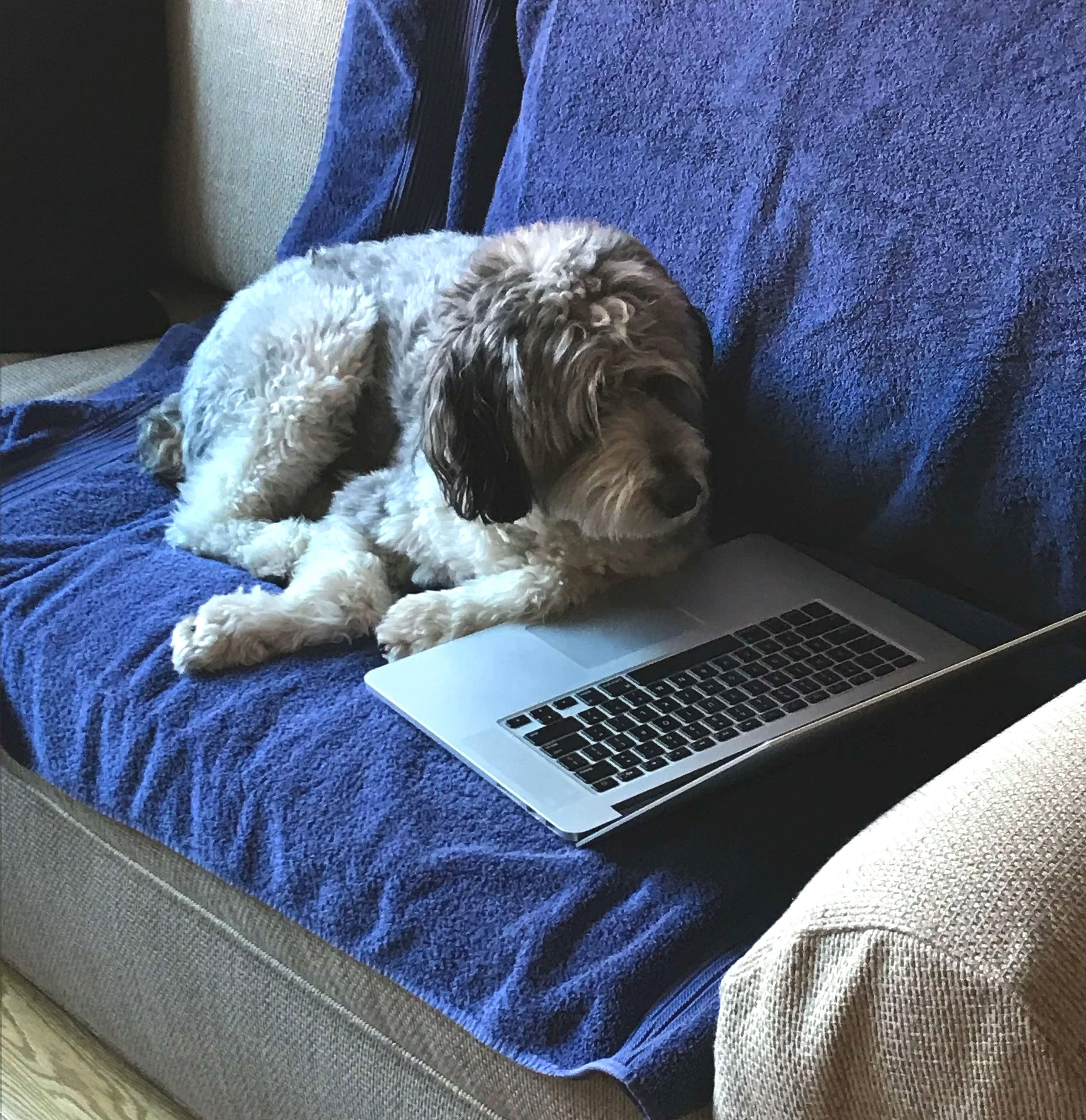
One of the reasons things have gotten so much better in recent years, however, is my son— my four-legged, fur-covered glutton for human attention. He turned five years old on May 24, 2025. I brought Oliver into my life in 2020, during the global pandemic, when he was eight weeks old and weighed in at only seven and a half pounds. I had turned forty years old that January and he was my (delayed) birthday present to myself.
In the summer of 2020, I was living in the West Village, and although I loved the neighborhood, because of the pandemic I felt lonelier than I ever had before. Then one day I saw a tiny, adorable looking puppy underneath a chair at my favorite coffee shop.
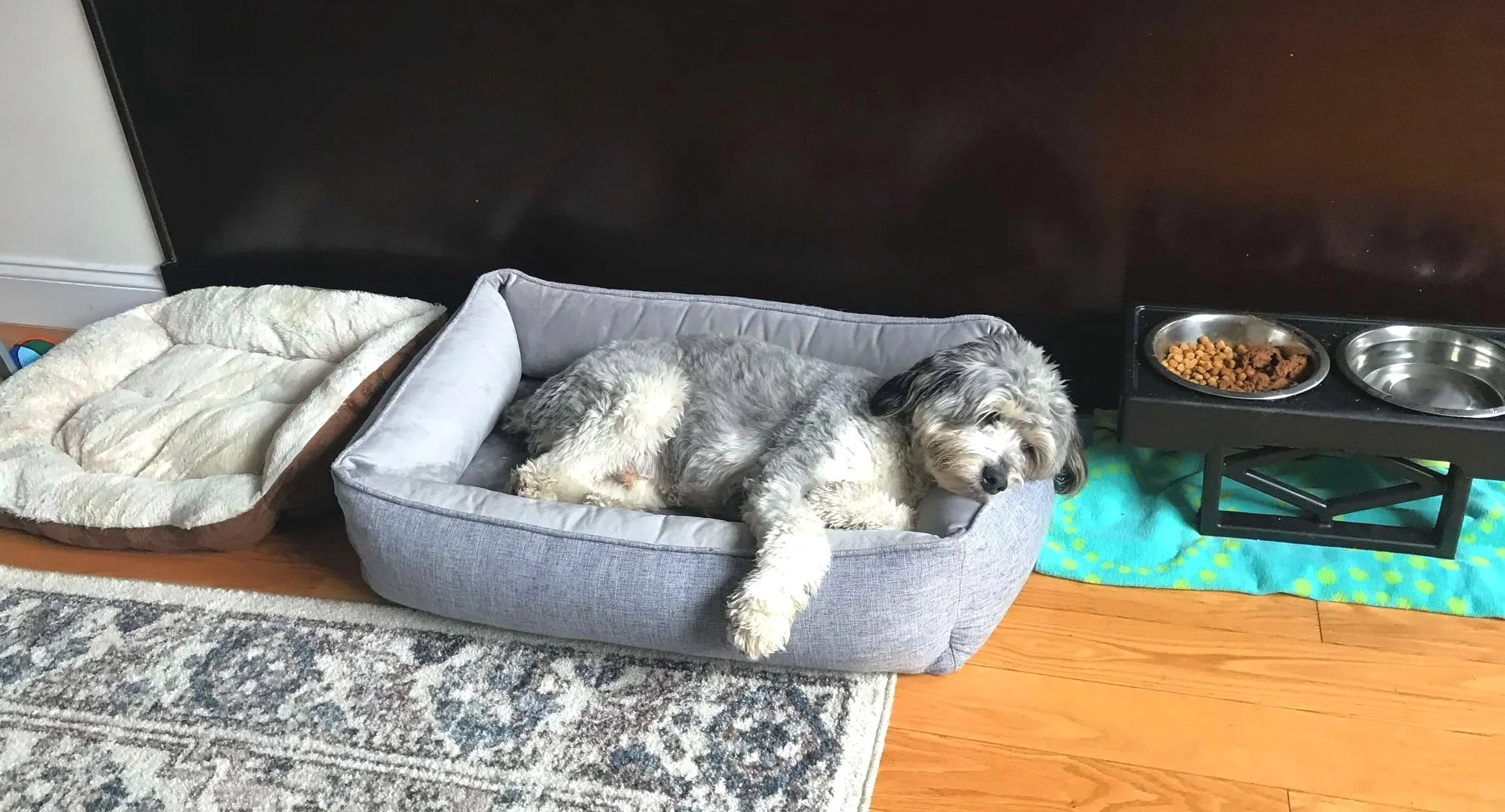
“Is that thing living or is it a stuffed animal,” I asked the owner.
The young lady, who was sitting with her boyfriend, responded, “Why, is he being bad?”
“He” has a personality?
I assumed that that was a confirmation of life.
Instantly, I needed to know more. “What is the breed and where can I find one,” I asked. The young woman gave me thorough answers to all my questions. She told me he was a mini Aussiedoodle, a combination of Australian Shepherd and Poodle. Immediately after coffee I thought, Now, will I be able to get a puppy of my own to fill the hole in my heart that the pandemic has widened?
Up to that point, I hadn’t trusted myself enough to take care of anyone but me—and even that wasn’t a complete success story. I thought this puppy would be small and docile enough to control. I thought about how much I could love that little guy. I made up my mind. I wanted a dog. I considered many things—the puppy wouldn’t need to be walked a lot, I thought. I was sure I’d be able let him pee on a pad in the corner of my apartment. Dog ownership would be a cinch.
I got home after coffee and looked online for “Aussiedoodle puppies.” It only took a few minutes before I found the young pooch of my dreams. His name was Oliver. Dark brown and white. In online videos of him in a group, my Oliver was always the most rambunctious. A pack leader, Oliver seemed to be leading all the other puppies around on a plot of kelly-green grass.
He was at an Amish farm in Ohio.
I was directed to a non-Amish couple who had phones and computers. I made the travel arrangements. I could hardly wait for Oliver to arrive.
Plans were made to meet at a parking lot in the Bronx. I was told to bring an envelope full of cash, so the driver of “a white van” could give me my puppy. The night before the exchange, I went through the painstaking effort of getting a load of twenty-dollar bills from local ATMs, as it was difficult to make arrangements like these during the pandemic, since life as we knew it was “closed to business.” I put the cash in an envelope. I started to get nervous. Was I taking part in a black-market operation?
I decided I didn’t want to know.
Extremely anxious and excited the next morning, I secured a 666-6666 taxi and was off! The driver and I arrived at the specified parking lot, but we didn’t see any “white van,” so of course I was nervous that we’d been stood up. It turned out the van was already there. I got out and we made the exchange. I handed over my envelope of cash and was left with a beautiful, tiny, bewildered bundle in my arms.
I imagined that this was what childbirth felt like, but without the pain.
I knew that this gorgeous little pup was going to be mine for the rest of his life.
As a small puppy Oliver was difficult to handle. Always biting me with his needle-like teeth and barking with his high-pitched yap. My old neighbor, George, later told me, “We were legitimately worried about you,” when he and others would see me walking a very young Oliver outside.
Despite his combative behavior, Oliver was submissive to other dogs—especially large ones. He would prostrate himself any time we would see another dog on the sidewalk. We didn’t get anywhere very quickly on those walks.
But today, at five years old, he’s a different dog. His dark, rich brown fur has changed to light grey—but his demeanor and personality have changed, too. No longer the mindless pup who would bark and bite just because having a voice and teeth were all new to him, today he is an adult dog with a brain who has plans. Now when he barks, pulls on the leash, or acts aggressively there’s a reason for it. He’s very protective of me, his female owner, with whom he’s spent nearly every day since he was two months old. He knows what he likes and what he doesn’t, so each of his actions is specifically motivated. Sometimes, instead of going with me downhill to the dog run, he would much rather lounge in the bar on the corner of Hudson and Barrow and get treats. Very demonstrably, he will refuse to move, as I pull him in the direction of the hill. His posterior firmly settles into the pavement. As I’ll tug, the leash even pulls his neck fat over his head, so it looks like all I’m walking is a collection of loose skin. I have no choice, but to use sheer force.
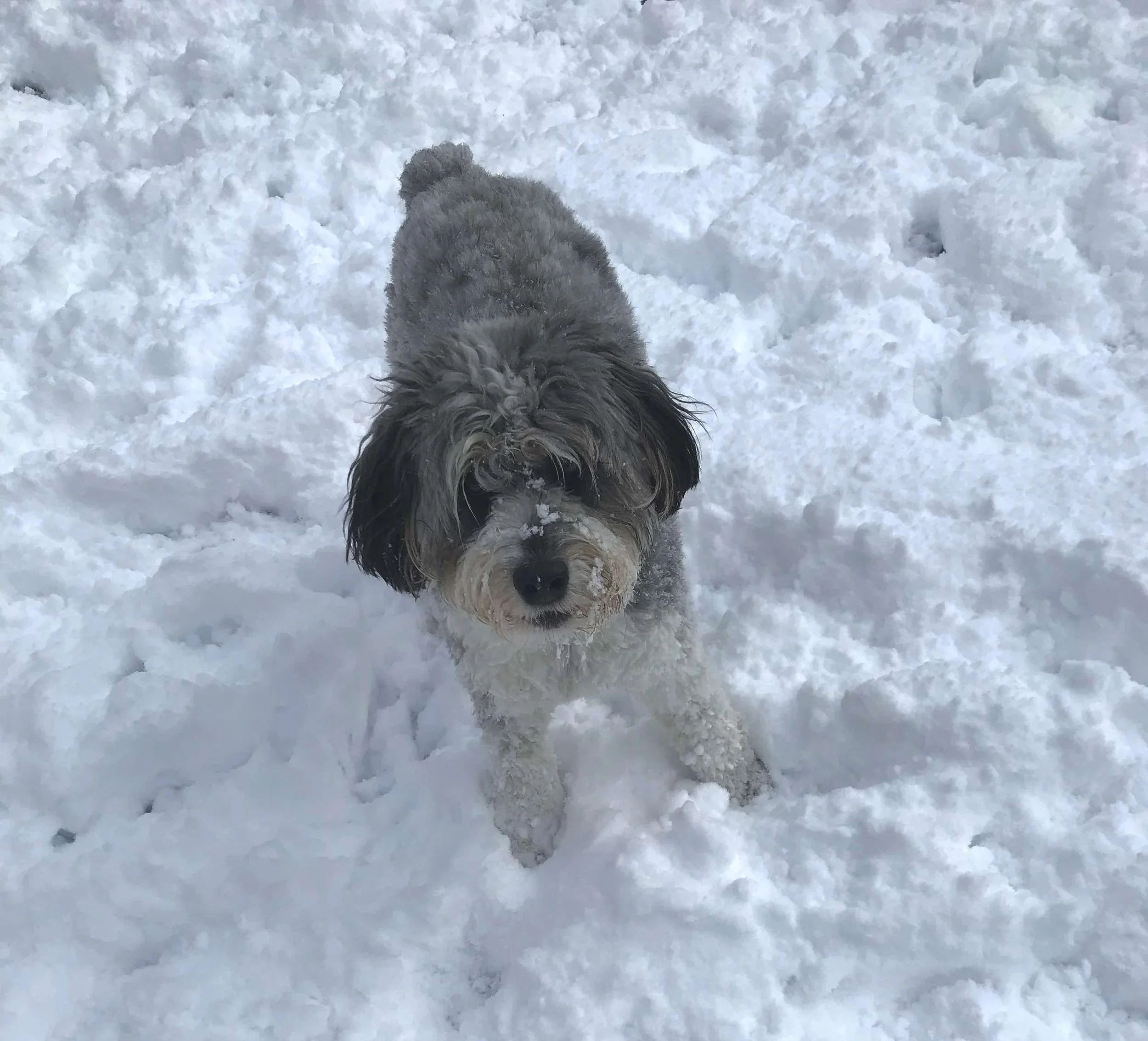
It is impressive to watch the lengths he’ll go just to get a treat. Like I always say, “Oliver is not dumb.” Whenever we walk past the long line of patrons waiting to eat at the café on my block, he becomes quite the showman. Every Saturday, when we pass Buvette, the French restaurant on my block, Oliver pulls back and refuses to walk forward. It’s the same routine every time. He wants attention from his “admirers.” I tug at the leash for him to follow me. and he puts his posterior on the pavement and sits down. I tug some more. He doesn’t budge, but he sits up fully erect, his eyes appearing to be reading my soul. Oliver’s eyes always warrant a comment from people in the line. “Look at those eyes…” they’ll say. I’ll then add, “I know, they’re human eyes.”
I do not want to appear like an animal abuser when he refuses to move so I soften my pull and lower my voice to assert authority. His response is to fully lay down on his side. As usual, I laugh because it’s funny, but this only encourages more disobedient behavior. I know I shouldn’t allow for this to keep happening, but I can’t help it.
I’m always happy to offer tourists free entertainment.
Oliver is said entertainment. He loves the cooing and laughing and stretches out even further until he’s fully extended across the sidewalk. Pedestrians trying to walk down the sidewalk are forced to step over this overweight bundle suddenly blocking their path. And still, the dog doesn’t budge. He stays like a dead dog until cooing subsides.
The American Disabilities Act defines a service animal as, “any dog that is individually trained to do work or perform tasks for the benefit of an individual with a disability, including a physical, sensory, psychiatric, intellectual, or other mental disability.” In that light, Oliver is the right helper dog for me. His mere presence lifts my spirits. He is my reason to get up in the morning. Walking and feeding my little guy are musts. He gives me purpose. He is the nine-to-five job that keeps me on the straight and narrow. Actually, he’s not just nine-to-five because so much overtime is required. But still, he’s the push I’ve been needing in my post-accident life.
On some daytime walks, when he approaches “Ray’s Super Deli” in the hopes of getting a piece of bacon, Oliver sits like a polite and patient patron. We wait outside the glass door for our favorite worker, Manolo, to notice us. When he finds a second to break free from the madness inside the crowded deli, Manolo comes to the door to praise Oliver for being “a good boy” and drops a small strip of bacon for him. The happiest moment of Oliver’s day.
Experts in the forms of ingesting—from gastronomy, to imbibing, to drug use—will tell you that it is the anticipation that is the greatest high. This is something I’m happy to witness in Oliver whenever we end up at Ray’s. I love to see the joy that a desire for bacon brings him.
Sundays are Manolo’s days off. Oliver will sit and lean against the glass door of Ray’s Super Deli never understanding when I tell him, “Manolo is not working today, Oliver. We’re not getting bacon.”
Oliver also knows to stop into Oscar’s Place on our way home. As we walk up Hudson toward our building, without warning, Oliver will stop mid-stride and rest his posterior on the pavement. By this point, it is assumed that I know what is going on. Eventually I catch on, but I’m often so taken aback by his abrupt halt that I’m more perplexed than anything else. Oliver wants us to stop at Oscar’s so he can be given a crouton, or two. Once I’ve realized this, I let the leash go slack and allow him to walk into the vestibule. Here, he makes himself comfortable on the doormat, looking for someone to give him his treat. Evidence of this custom is proven by the ring of water molecules when we leave. Oliver has been looking so fervently into the restaurant that his breath appears on the glass.
The workers at Oscar’s have known Oliver since the day I brought him home. One of the owners, Trinidad, used to play with Oliver when he was a small puppy, while he and his brother, chef Crispen, would tell me stories of their youths raising dogs in Mexico.
The original owner of Oscar’s, an Englishman named Neil Smith, was integral to my getting Oliver in the first place. I was having some last-minute doubts. I told Neil I wasn’t sure if I’d be able to properly care for a dog. Without hesitation, Neil said he would take the dog if I couldn’t keep it. Neil had a wife and a young son at home, so I felt secure that my Oliver would go to a big happy home if it didn’t work out with me. Now Neil tells me he wouldn’t have taken the dog. He had been bluffing. But it’s no matter. It all worked out—so far, anyway.
One night, when Oliver and I waited for our customary croutons, Trinidad said to me, “We should change the name of this place from “Oscar’s” to “Oliver’s Place.”
I said, “Thank you for such kind words about my son—”
“—our son,” Trinidad abruptly said back, as he handed me a cup of croutons to go.
If it takes a village to raise a child, the West Village has helped to raise Oliver. I’m grateful.
I never could have done it alone.
I feel as warmly embraced by the people of this blessed neighborhood as I do by my own blood family, far away. My dad always asks my brothers about their kids before asking anything about them. Similarly, on the phone, he now asks me about my four-legged son before asking anything about me.
“How’s Oliver,” he’ll ask.
Finally, I’m just one of the guys.